United Kingdom
+44 (0) 1628 660600
hello@creative-computing.co.uk
hello@creative-computing.co.uk
Your ERP system was supposed to be the backbone of your business. But what happens when the backbone starts to buckle? For many finance directors and business owners, the system that once felt like progress has quietly become a constraint. It processes transactions, yes. But it no longer keeps pace with the business you are building.
Here are five signs your current ERP is working against you, and how Microsoft Dynamics 365 Business Central changes the picture.
If your finance team still spends the final week of every month reconciling spreadsheets, chasing departmental figures, and manually compiling journals, your ERP is not doing its job. A slow month-end close is not just an inconvenience, it delays the information your leadership team needs to make decisions, often by weeks.
Picture a distribution business with teams across three sites. Each location submits its numbers in a different format. Finance pulls everything together manually, spending up to ten days on a process that should take two. By the time the board sees the figures, they are already out of date.
Business Central automates reconciliation, journal postings, and intercompany consolidation, bringing month-end close down to a matter of days. The numbers are consistent, auditable, and available when you actually need them.
Growth is the goal. But when headcount rises, transaction volumes increase, or you expand into new markets, an outdated ERP starts to strain. You find yourself adding workarounds, creating shadow systems, or buying bolt-on tools that never quite integrate properly.
Consider a manufacturing business that lands its largest contract to date. Suddenly, the system that worked for 50 purchase orders a month is struggling with 500. Reports slow down. Errors creep in. The IT team is firefighting instead of enabling.
Business Central is built to scale. Whether you are a growing SME or an established mid-market business, it flexes with you, adding users, legal entities, currencies, and locations without requiring a system rebuild. You can explore how this works in practice across our manufacturing and distribution sector pages.
If your ERP sits in isolation from your CRM, your inventory platform, your payroll tool, or your e-commerce store, you are losing time and accuracy every single day. Data gets re-keyed, errors multiply, and nobody has a single source of truth.
A non-profit organisation, for example, might be managing donor records in one system, grant reporting in another, and finance in a third. Staff spend hours each week manually moving data between platforms. Errors are inevitable. Audits become stressful.
Business Central integrates natively with the wider Microsoft ecosystem, including Microsoft 365, Teams, and Power BI, and connects cleanly with third-party platforms through its open API architecture. Tools like Continia extend this further, automating accounts payable, expense management, and vendor payments so that your entire operation works from one connected environment.
If your board is making decisions based on last month's numbers, or worse, last quarter's, your ERP is a liability. Businesses that cannot see their financial position in real time are always reacting rather than planning.
Imagine a finance director who cannot answer a simple question from the CEO: "What is our cash position today?" The answer requires pulling figures from three separate reports, cross-referencing a spreadsheet, and calling the purchase ledger team. The whole process takes half a day.
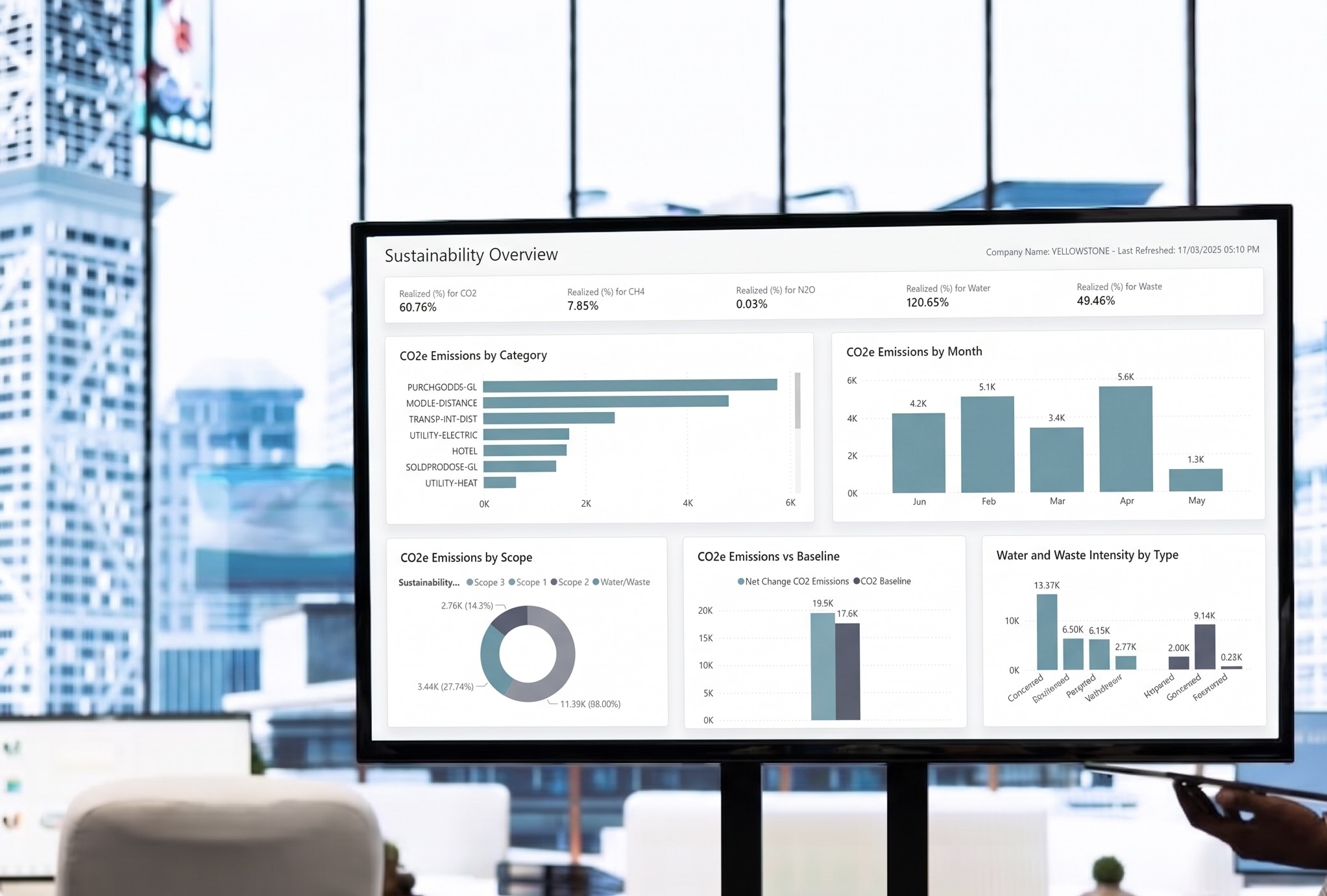
Business Central, combined with Power BI, delivers live dashboards and role-specific reporting that puts accurate, real-time data in front of the right people instantly. From cash flow forecasting to project profitability, your leadership team can see what is actually happening, not what happened weeks ago.
Tax legislation changes. Audit requirements tighten. HMRC's Making Tax Digital initiative continues to evolve. If your ERP was not designed with compliance at its core, keeping up becomes a manual and error-prone exercise that exposes your business to real risk.
A professional services firm approaching its year-end audit discovers that VAT records across several periods contain inconsistencies, all traceable to manual data entry in a system that lacks proper audit trails. The resulting corrections are costly and time-consuming.
Business Central is built with compliance embedded rather than bolted on. MTD for VAT is fully supported, audit trails are automatic, and role-based access controls ensure that financial data is handled correctly at every stage. When regulations change, Microsoft updates the platform, so your team does not have to.
If you recognise your business in any of these scenarios, the good news is that you do not need to keep working around a system that was never built for where you are going. Business Central is trusted by more than 50,000 companies worldwide to manage finance and operations with the clarity and control that growth demands.
At Creative Computing, we have completed over 500 implementations and worked with businesses across manufacturing, distribution, non-profit, and media to make that transition as smooth as possible. Our implementation approach is built around your business, not a generic template.
Ready to find out whether your current ERP is fit for the next stage of your growth? Book a free ERP readiness review with Creative Computing and we will give you an honest assessment of where you stand and what a better system could look like for your business.

.jpg)

.jpeg)
.png)

.jpg)
.png)
.png)