
United Kingdom
+44 (0) 1628 660600
hello@creative-computing.co.uk
hello@creative-computing.co.uk

Every manufacturer starts somewhere manageable. A handful of products, a simple parts list, an accounts package that handles invoicing and payroll well enough. Then the order book grows, the product range expands, and the business starts making things with sub-assemblies, variant components and multiple suppliers for the same raw material.
At that point, the tools that worked at £2 million turnover start to strain. A parts list in a spreadsheet cannot easily tell you that a change to one sub-assembly affects fourteen finished products. A basic accounting system can tell you what a job cost on paper, but not what it is actually costing as labour and material get consumed against it. Stock counts and finance figures start to disagree, and nobody is quite sure which number is right.
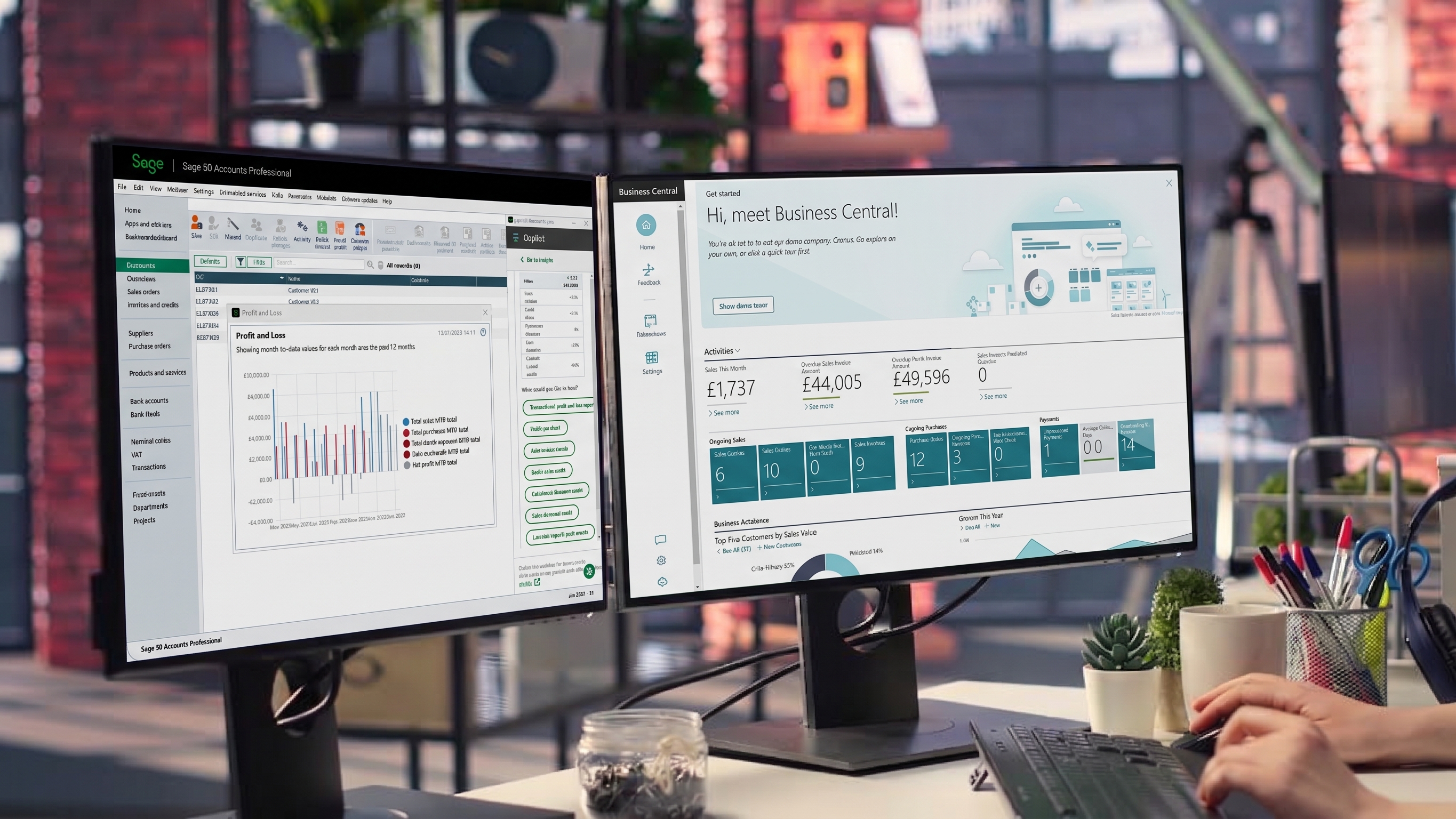
This is the point where Business Central for manufacturers tends to get a serious look, not because the business wants new software for its own sake, but because production has genuinely outgrown the tools tracking it.
A Bill of Materials sounds like a simple concept: a list of the components that go into a finished product. In practice, most manufactured products are built from sub-assemblies that are themselves built from other components, several levels deep. A single change to a fastener, a coating or a supplier part can ripple through dozens of finished items, and if that structure lives in a spreadsheet, someone has to manually trace every one of those dependencies by hand.
Multi-level Bills of Materials in Business Central solve this by structuring each product as a nested set of components and sub-assemblies, rather than a flat list. Update a component at any level and the system reflects that change everywhere it is used, in costing, in production orders and in material requirements planning. It also means engineering changes, phased-in replacement parts and multiple product variants can be managed without duplicating entire parts lists for every small variation.
For a manufacturer with a genuinely complex product range, this alone removes a significant source of costly errors: the wrong revision of a component being built into a finished product because the parts list was out of date somewhere in the chain.
A production plan is only useful if it reflects what is actually happening on the shop floor. Business Central's production orders and routing functionality gives each job a defined sequence of operations, work centres, setup and run times, so a production order is not just a target date but a tracked path from raw material to finished goods.
As operations are reported complete, the system updates material consumption, capacity usage and status in real time, so a production manager can see exactly where a job is in its routing rather than relying on a whiteboard or a verbal update from the shop floor. Work order tracking also supports both serial and parallel routing, which matters for manufacturers running mixed processes, some operations that must happen in strict sequence, others that can run simultaneously to save time.
The practical effect is fewer surprises. If a work order is running behind because a machine centre is overloaded, that becomes visible early enough to reschedule, rather than showing up as a missed delivery date.
This is usually where the reporting gap is felt most sharply. Standard accounting software can tell a manufacturer what was spent, in total, over a period. It generally cannot tell them, in the moment, what an individual job or production run is actually costing as labour, materials and overhead are consumed against it.
Because production orders, purchase orders and time postings all sit inside the same system, Business Central can calculate job and production costs as they accrue, not just once a job is closed and invoiced. That means a manufacturer can see a job's cost position while it is still in progress, and catch a run that is overspending against its estimate before it is finished, rather than discovering the margin problem weeks later at month end.
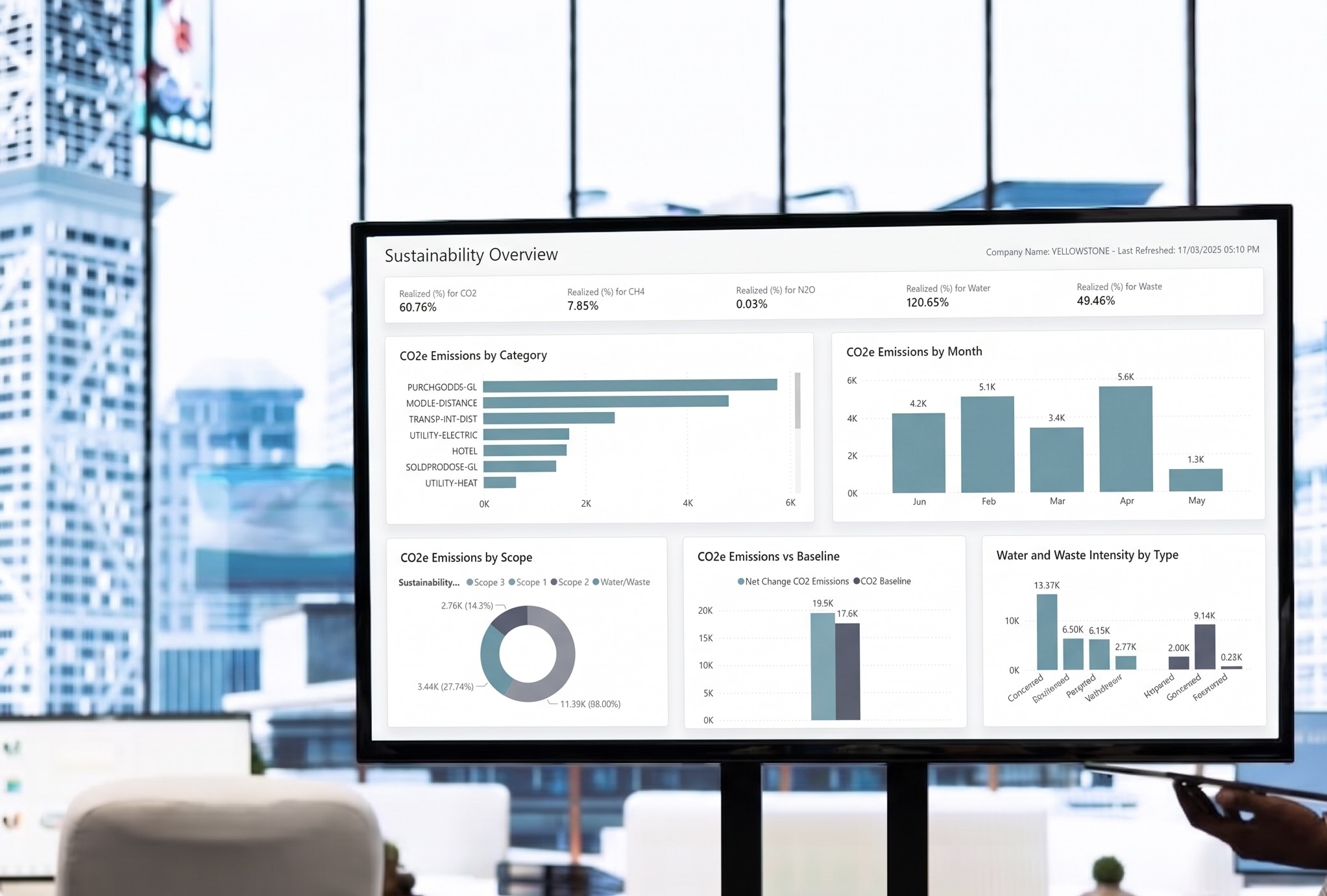
Paired with reporting tools like Power BI, that costing data becomes something a production or finance manager can actually interrogate: which product lines are consistently under-costed at quoting stage, which work centres are driving overhead, where margin is actually being made or lost.
There is a fairly consistent point in a manufacturer's growth where the gap between what the business needs to know and what its systems can tell it becomes unavoidable. Below roughly 30 staff, a manufacturer's product range and job volume are usually small enough that spreadsheets, manual costing sheets and a basic accounts package can be stretched to cover the gaps, even if it takes someone's Friday afternoon to do it.
Somewhere in the 30 to 150 staff range, that stops working. Order volume and product complexity increase faster than headcount in finance and operations, so the manual reconciliation between stock records, production data and the accounts becomes a genuine bottleneck rather than an inconvenience. This is also usually the point where a manufacturer is too large for a purely SME-focused accounting package, but not yet at the scale where a heavyweight, highly customised ERP system makes financial sense.
A manufacturing ERP like Business Central sits deliberately in that space: enough production functionality to manage BOMs, routing and costing properly, without the implementation cost and complexity of a system built for much larger manufacturers.
Consider a fictional but realistic case: a West Midlands manufacturer of precision metal components, roughly 85 staff, supplying finished parts and sub-assemblies into several sectors including automotive and industrial equipment. The business has grown from a handful of core products to a catalogue of variants and custom builds, each with its own multi-level parts list.
Before implementing Business Central, quoting relied on a shared spreadsheet of standard costs that nobody had fully updated in over a year. Production scheduling lived partly in the accounts system and partly in a production manager's own tracking sheet. Job costs were only known properly once a job was invoiced, by which point any margin erosion had already happened.
After moving core production onto Business Central, the same manufacturer can trace a component change through every affected finished product in minutes rather than days, track each work order's actual progress against its routing, and see a job's real cost position while it is still on the shop floor. Quoting draws on live standard costs rather than a spreadsheet nobody trusts, and the finance team stops reconciling stock and production data by hand at month end.
None of that is a dramatic transformation. It is the ordinary, unglamorous business of the system finally matching the complexity of what the business actually makes.
If quoting relies on out-of-date standard costs, if nobody can say what a job is actually costing until it is invoiced, or if production planning lives in someone's personal spreadsheet, that is usually a sign the current tools have been outgrown rather than a sign anything has gone wrong.
Get in touch with Creative Computing to talk through a manufacturing-sector Business Central implementation, and what it would take to bring stock, Bills of Materials and job costing into one system built to handle production complexity properly.

.jpg)

.jpeg)
.png)

.jpg)
.png)
.png)